

Employee shift planning is one of the most important responsibilities for managers who oversee hourly, shift-based, or distributed teams. A well-planned schedule ensures that the right number of employees are available at the right time while helping businesses control labor costs and maintain productivity.
However, creating an efficient work schedule is not always easy. Managers have to balance employee availability, business demand, skills, time-off requests, shift coverage, overtime, labor budgets, and unexpected absences. When these factors are managed manually, even a small scheduling mistake can create a chain of operational problems.
An effective employee shift planning process can help businesses reduce scheduling conflicts, improve workforce utilization, support employees’ work-life balance, and maintain consistent coverage. With the right approach and scheduling technology, managers can spend less time fixing schedules and more time managing their teams.
This guide explains what employee shift planning is, why it matters, the challenges managers commonly face, and how to create efficient work schedules for modern businesses.
What Is Employee Shift Planning?
Employee shift planning is the process of determining when employees will work, which shifts they will cover, and how workforce coverage will be distributed throughout the day, week, or scheduling period.
A shift plan typically considers the number of employees needed for each period, employee availability, skills and qualifications, expected workload, time-off requests, and business operating hours.
For example, a retail business may need more employees during weekends and evenings than during slower weekday mornings. A restaurant may require additional staff during lunch and dinner, while a service company may need employees assigned to different locations based on customer appointments.
Effective shift planning connects these business requirements with employee availability to create a schedule that works for both the organization and its workforce.
Why Is Employee Shift Planning Important?
Employee scheduling directly affects daily business operations. If too few employees are scheduled, customers may experience slower service and existing employees may become overloaded. If too many employees are scheduled, the business may spend more on labor than necessary.
Good shift planning helps managers find the right balance.
A well-designed schedule gives employees a clearer understanding of when they are expected to work. It also helps managers identify staffing gaps before they become urgent problems.
For businesses with larger teams, multiple departments, or multiple locations, structured shift planning becomes even more important because managers have more variables to coordinate.
The Main Goals of Effective Shift Planning
The purpose of shift planning is not simply to fill every available shift. An efficient schedule should support several goals at the same time.
First, the business needs adequate coverage during operating hours. Every critical shift should have enough qualified employees to handle expected workloads.
Second, managers should avoid unnecessary labor costs. Overstaffing can increase payroll expenses, while poor planning can lead to avoidable overtime.
Third, schedules should account for employee availability and reasonable preferences whenever possible. A schedule that constantly conflicts with employees’ availability can lead to dissatisfaction and increased turnover.
Finally, the scheduling process should be easy to maintain. A schedule that takes hours to create and requires constant manual corrections is difficult to scale.
Common Challenges in Employee Shift Planning
Creating an efficient work schedule becomes more complicated as workforce size and business requirements increase.
Conflicting Employee Availability
Employees may have different availability because of family responsibilities, education, transportation, second jobs, or personal commitments. If managers do not have an accurate view of availability, they may assign employees to shifts they cannot work.
This creates unnecessary schedule changes and additional administrative work.
Last-Minute Absences
Even a carefully prepared schedule can be affected by unexpected absences. When someone calls out sick, managers need to find a replacement without leaving a shift understaffed.
Without a structured process, managers may have to contact employees individually to determine who can cover the shift.
Overtime
Poor shift planning can result in some employees being scheduled for excessive hours. Overtime may be necessary in certain circumstances, but repeatedly relying on the same employees can increase labor costs and contribute to fatigue.
Uneven Shift Distribution
Managers should pay attention to how less desirable shifts, such as nights, weekends, and holidays, are distributed. Repeatedly assigning the same employees to these shifts can create perceptions of unfairness.
Multiple Locations
Businesses with several locations have another layer of complexity. Managers need to know which employees are available at each location and whether they have the skills required for particular assignments.
Frequent Schedule Changes
Business demand can change quickly. Managers may need to modify shifts because of changes in workload, employee availability, or unexpected operational requirements.
A scheduling process that cannot adapt easily can create confusion for both managers and employees.
How to Create an Efficient Employee Shift Plan
An effective shift planning process starts with understanding business requirements and then matching those requirements with available employees.
1. Understand Your Business Staffing Requirements
Before assigning employees, determine how many people are actually needed during each period.
Look at operating hours, customer demand, workload patterns, seasonal changes, and department requirements.
For example, a business may need only three employees during a slow morning period but require eight during a busy afternoon. Using the same staffing level throughout the day may not be efficient.
Demand-based planning helps managers schedule employees according to actual operational needs rather than simply dividing hours equally across the week.
2. Determine Required Skills for Each Shift
Not every employee can necessarily perform every role.
Some shifts may require employees with specific training, certifications, technical skills, or supervisory responsibilities.
Managers should identify these requirements before assigning shifts.
A schedule may look fully staffed on paper but still create operational problems if the employees assigned to a shift do not have the skills needed to perform critical tasks.
3. Collect Accurate Employee Availability
Employee availability should be considered before the schedule is created.
Managers should maintain current information about when employees can and cannot work. Availability can change, so relying on old information may result in avoidable conflicts.
A centralized scheduling system can make availability information easier to manage and review.
This also gives employees a more structured way to communicate changes in their availability.
4. Consider Employee Preferences
Availability and preferences are not always the same thing.
An employee may be available to work on Saturday but prefer not to work every Saturday. Another employee may prefer morning shifts because of family responsibilities.
Managers cannot always accommodate every preference, but considering preferences where possible can improve employee satisfaction.
A balanced approach is to meet business requirements first while using employee preferences to make the schedule more practical and sustainable.
5. Build the Schedule Around Coverage
Once staffing requirements, skills, availability, and preferences are understood, managers can begin assigning employees to shifts.
The priority should be adequate coverage.
Every critical period should have enough qualified employees. At the same time, managers should avoid unnecessary overlapping shifts that increase labor costs without adding operational value.
The best schedule is not necessarily the one with the most employees. It is the one that provides appropriate coverage for the expected workload.
6. Avoid Unnecessary Overtime
Overtime should be monitored while the schedule is being created rather than only after employees have already worked the additional hours.
Managers should review how many hours each employee is expected to work during the scheduling period.
If one employee is approaching overtime while another qualified employee has available hours, managers may be able to redistribute shifts.
This can help control labor costs while creating a more balanced workload.
7. Distribute Shifts Fairly
Fair scheduling can have a significant impact on employee morale.
Managers should review how weekends, evenings, holidays, opening shifts, closing shifts, and other less desirable assignments are distributed.
Fair does not always mean that every employee receives exactly the same number of each type of shift. Business requirements and employee roles may differ.
Instead, the goal should be to use consistent scheduling principles and avoid unnecessary favoritism.
8. Publish Schedules With Enough Notice
Employees need time to organize their personal lives around their work commitments.
Publishing schedules as early as reasonably possible gives employees greater predictability.
It also reduces the number of last-minute questions managers receive about upcoming shifts.
A predictable scheduling process can improve communication and help employees plan transportation, childcare, appointments, and other responsibilities.
9. Create a Clear Process for Shift Changes
Schedule changes are sometimes unavoidable.
A manager should establish a clear process for handling shift swaps, absences, and coverage requests.
Employees should know who needs to approve a shift change and where the updated schedule will be recorded.
This prevents situations where employees agree to informal changes but the official schedule is not updated.
10. Review the Schedule Before Publishing
Before releasing a schedule, managers should perform a final review.
Check whether:
- All required shifts have coverage.
- Employees are not double-booked.
- Availability restrictions have been considered.
- Required skills are covered.
- Overtime risks have been identified.
- Time-off requests are reflected.
- Employees are not assigned unnecessarily long sequences of shifts.
- Coverage is appropriate for expected demand.
This final review can catch errors before they affect employees or customers.
Using Scheduling Software for Better Shift Planning
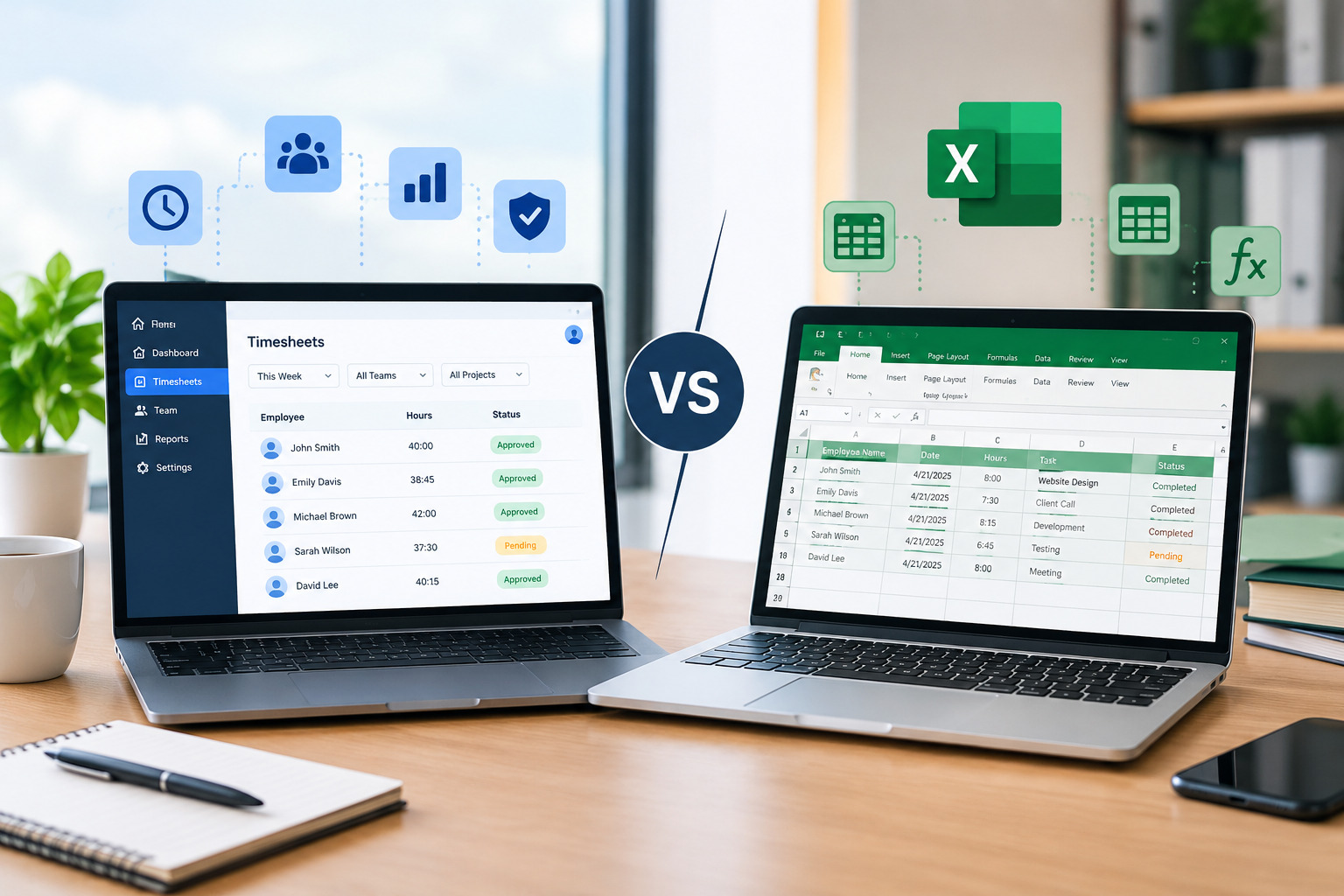
Manual shift planning can work for small teams with straightforward schedules. However, spreadsheets and paper-based systems become increasingly difficult to maintain as businesses grow.
Employee scheduling software provides a centralized way to create, manage, publish, and update schedules.
Instead of maintaining several spreadsheets or communicating changes through different channels, managers can manage scheduling information in one system.
Scheduling software can also help managers gain better visibility into employee availability, shift coverage, and schedule changes. This can reduce repetitive administrative work and make it easier to respond when business conditions change.
Benefits of Using Scheduling Software for Shift Planning
Faster Schedule Creation
A digital scheduling system can reduce the amount of manual work involved in creating employee schedules.
Managers can work from centralized employee information instead of repeatedly checking separate documents and messages.
Fewer Scheduling Conflicts
Centralized schedules make it easier to identify overlapping assignments, availability issues, and other conflicts.
Better Employee Communication
Employees can access their schedules through the scheduling system and receive updates when changes are made, depending on the platform’s features.
Improved Workforce Visibility
Managers can gain a clearer picture of who is scheduled, when employees are available, and where coverage may be needed.
Easier Shift Changes
A structured system can make shift swaps and schedule changes easier to manage while maintaining appropriate approval controls.
Better Labor Cost Management
Greater visibility into scheduled hours can help managers identify potential overtime and unnecessary staffing.
Employee Shift Planning vs. Employee Scheduling
The terms employee shift planning and employee scheduling are closely related, but they can describe slightly different stages of workforce management.
Shift planning is generally focused on determining workforce requirements and deciding how employees should be allocated across shifts.
Employee scheduling is the process of assigning specific employees to those shifts and communicating the final schedule.
In practice, businesses often use the terms interchangeably. However, effective scheduling software can support both the planning and execution sides of the process.
How to Handle Last-Minute Shift Changes
Even the best schedule cannot prevent every unexpected absence.
When an employee calls out, managers should have a consistent process for finding coverage.
First, identify whether the shift requires a specific skill or role. Then determine which qualified employees are available.
Managers should also consider overtime and existing workloads before assigning the replacement.
A structured scheduling system can make this process easier by giving managers better visibility into employee schedules and availability.
The goal is to fill the shift without creating another scheduling problem elsewhere.
How to Make Shift Planning More Employee-Friendly
Efficient scheduling should not focus only on business needs.
Employees are more likely to respond positively to schedules that are predictable, transparent, and reasonably flexible.
Managers can improve the employee experience by communicating schedules in advance, respecting availability, creating a clear shift-swap process, and distributing less desirable shifts fairly.
Employees should also know where to find the official version of their schedule.
When everyone works from the same scheduling information, there is less room for confusion.
Explore : How Scheduling Software Improves Employee Satisfaction
Measuring Whether Your Shift Planning Process Works
Businesses should not assume that a schedule is efficient simply because every shift is filled.
Managers can evaluate scheduling effectiveness using several indicators.
Look at overtime levels, uncovered shifts, last-minute changes, employee complaints, absenteeism patterns, and the amount of time managers spend creating schedules.
If schedule changes happen frequently, it may indicate that the planning process does not accurately reflect employee availability or business demand.
Similarly, consistently high overtime may suggest that staffing levels or shift allocation need to be reviewed.
Regularly reviewing these patterns allows managers to improve scheduling over time.
Common Employee Shift Planning Mistakes to Avoid
Scheduling Without Considering Demand
Using the same number of employees for every period can result in overstaffing during quiet periods and understaffing during busy periods.
Ignoring Employee Availability
Assigning employees to shifts they cannot work creates unnecessary changes and frustration.
Relying Too Heavily on One Employee
Repeatedly assigning additional hours to the same employees can create overtime and fatigue.
Making Too Many Last-Minute Changes
Frequent changes make it harder for employees to plan their personal lives.
Using Outdated Scheduling Information
If managers maintain multiple spreadsheets or documents, employees may end up working from different versions of the schedule.
Forgetting to Review the Final Schedule
Even a carefully created schedule can contain errors. A final review is essential before publishing.
Employee Shift Planning Best Practices
For a more reliable scheduling process, managers should focus on a few core principles.
Start with business demand rather than employee hours alone. Identify how many employees and which skills are needed during each period.
Keep employee availability information current and consider reasonable preferences where possible.
Create schedules with enough notice and establish a consistent process for shift swaps and changes.
Monitor overtime and workload distribution instead of reviewing labor costs only after the scheduling period ends.
Finally, use scheduling data to identify recurring problems. If managers are constantly making the same types of corrections, the underlying scheduling process may need improvement.
Also Read : Employee Scheduling Best Practices
The Role of Shift Planning in Workforce Management
Employee shift planning is one part of a broader workforce management process.
Scheduling determines when employees are expected to work, while timesheets and attendance records help businesses understand the hours employees actually work.
Connecting these processes can give managers better visibility into workforce operations.
For example, if scheduled hours consistently differ from actual worked hours, managers may need to investigate whether schedules are unrealistic, employees are frequently staying late, or staffing levels need adjustment.
This connection between planning, scheduling, and time tracking can help businesses make more informed workforce decisions.
How Office1Solution Can Help With Employee Shift Planning
Office1Solution helps businesses simplify workforce operations by bringing important workforce processes into a centralized environment.
For businesses managing employee shifts, a structured scheduling system can make it easier to organize employee schedules, improve workforce visibility, and manage changes as business requirements evolve.
Instead of relying entirely on spreadsheets and manual communication, managers can use a digital workforce management approach to create a more organized scheduling process.
For businesses looking to improve employee shift planning, the next step is to evaluate how much time managers currently spend creating schedules, how often scheduling conflicts occur, and whether employees have an easy way to access schedule information.
Explore Workforce Management Solutions
Frequently Asked Questions About Employee Shift Planning
What is employee shift planning?
Employee shift planning is the process of determining staffing requirements and assigning employees to specific work shifts based on business demand, availability, skills, and scheduling requirements.
How do you create an efficient employee work schedule?
Start by understanding staffing demand, identify the skills required for each shift, collect employee availability, assign qualified employees, monitor overtime, distribute shifts fairly, and review the schedule before publishing.
What is the best way to manage employee shift schedules?
For small teams, a simple scheduling process may be sufficient. For larger or more complex teams, employee scheduling software can centralize schedules, availability, shift changes, and workforce information.
How can businesses reduce scheduling conflicts?
Businesses can reduce conflicts by maintaining accurate employee availability, reviewing schedules before publishing, avoiding overlapping assignments, and using a centralized scheduling system.
How can shift planning reduce labor costs?
Effective shift planning matches staffing levels with expected demand, helps managers avoid unnecessary overstaffing, and provides better visibility into potential overtime.
How far in advance should employee schedules be created?
The ideal notice period depends on the business and workforce. However, providing schedules as far in advance as reasonably possible gives employees more predictability and makes personal planning easier.
Can scheduling software help with shift planning?
Yes. Scheduling software can centralize employee schedules and availability, simplify schedule creation, improve communication, and make schedule changes easier to manage.
Final Thoughts
Employee shift planning is more than assigning employees to available hours. It is about matching workforce capacity with business demand while creating schedules that are practical for employees and sustainable for the organization.
An efficient schedule provides the right coverage without unnecessary labor costs. It considers employee availability, required skills, workload, overtime, and fair shift distribution.
For small teams, manual scheduling may be enough. But as the workforce grows, spreadsheets and disconnected communication channels can make scheduling increasingly difficult to manage.
A centralized employee scheduling system can help managers create more organized schedules, improve workforce visibility, reduce scheduling conflicts, and respond more efficiently when plans change.
The best approach is to combine thoughtful scheduling practices with the right technology. When businesses understand their staffing needs, maintain accurate employee information, communicate schedules clearly, and continuously review scheduling performance, they can build a workforce planning process that supports both operational efficiency and employee satisfaction.
Recent Posts
- Time and Attendance Software: Complete Guide for Employers

- Time and Attendance: What’s the Difference Between the Two?

- How to Reduce Timesheet Errors and Improve Payroll Accuracy

- Timesheet App for Employees: Features, Benefits & Best Practices

- Timesheet Software vs. Excel: Which Is Better for Businesses?
Stay Ahead. Simplify Workforce Management.
Empower your teams to work efficiently with a unified workforce platform built for clarity, control, and actionable insights across your organization.