

Choosing the right payroll schedule is one of the most important decisions employers make when managing compensation and workforce operations. While many businesses focus on payroll software, tax compliance, and wage calculations, the frequency of employee pay can have a significant impact on payroll administration, cash flow management, employee satisfaction, and operational efficiency.
Two of the most common payroll schedules used by businesses are bi-weekly payroll and semi-monthly payroll. Although these terms are often used interchangeably, they are actually very different payroll structures.
Understanding the differences between bi-weekly and semi-monthly payroll can help organizations make informed decisions that align with their workforce needs, payroll processes, and business goals.
In this guide, we’ll explain how each payroll schedule works, compare their advantages and disadvantages, and help employers determine which option is best for their organization.
What Is a Payroll Schedule?
A payroll schedule determines how often employees receive their wages. It establishes the pay periods, payroll processing timelines, and payment dates throughout the year.
Payroll schedules affect:
- Employee pay frequency
- Payroll administration
- Overtime calculations
- Cash flow management
- Payroll processing costs
- Employee expectations
Selecting the right payroll schedule is essential for maintaining payroll accuracy and ensuring smooth workforce operations.
What Is Bi-Weekly Payroll?
Bi-weekly payroll means employees are paid once every two weeks.
Since a year contains 52 weeks, employees on a bi-weekly payroll schedule receive:
26 paychecks per year
Most bi-weekly payroll schedules occur on the same weekday every two weeks.
For example:
- Every other Friday
- Every other Thursday
Because the schedule follows a 14-day cycle, some months will contain three paydays instead of two.
Employees often appreciate bi-weekly payroll because it provides more frequent access to earnings and creates a predictable payment pattern.
Also read : Complete Guide to Minimum Wage: All You Need To Know (2026)
What Is Semi-Monthly Payroll?
Semi-monthly payroll means employees are paid twice each month on specific calendar dates.
Employees typically receive pay on:
- The 15th of the month
- The last day of the month
This results in:
24 paychecks per year
Unlike bi-weekly payroll, semi-monthly schedules are tied to dates rather than specific weekdays.
This means payroll processing can occasionally become more complex when pay dates fall on weekends or holidays.
Semi-monthly payroll is commonly used by businesses with salaried employees because it aligns well with monthly budgeting and accounting processes.
Understanding the Key Difference
Although both payroll schedules usually result in employees being paid twice per month, the way they operate is fundamentally different.
Bi-weekly payroll follows a recurring 14-day cycle, while semi-monthly payroll follows fixed calendar dates.
This distinction affects:
- Number of annual pay periods
- Payroll calculations
- Overtime processing
- Administrative workload
- Cash flow forecasting
For employers, understanding these differences is critical before selecting a payroll structure.
Bi-Weekly Payroll Example
Imagine an employee earns $52,000 annually.
Under a bi-weekly payroll schedule:
- Annual salary: $52,000
- Number of pay periods: 26
Each paycheck would be:
$52,000 ÷ 26 = $2,000
The employee would receive a paycheck every two weeks throughout the year.
In some months, the employee would receive three paychecks instead of two.
Many employees view these “extra paycheck months” as a financial advantage.
Semi-Monthly Payroll Example
Using the same annual salary:
- Annual salary: $52,000
- Number of pay periods: 24
Each paycheck would be:
$52,000 ÷ 24 = $2,166.67
The employee receives larger paychecks but fewer total payments throughout the year.
Payroll dates remain consistent because they are tied to calendar dates rather than workweeks.
Also read : Make Payroll a Breeze With Our Free Pay Stub Template (2026 Guide)
Advantages of Bi-Weekly Payroll
Bi-weekly payroll is one of the most popular payroll schedules in the United States because it offers several operational benefits.
Easier Overtime Calculations
One of the biggest advantages of bi-weekly payroll is its alignment with weekly work schedules.
For businesses with hourly employees, overtime calculations are often simpler because each pay period contains exactly two workweeks.
This reduces payroll complexity and improves accuracy.
More Frequent Employee Payments
Employees receive 26 paychecks annually instead of 24.
Many workers appreciate receiving pay more frequently because it helps with:
- Budgeting
- Monthly expenses
- Cash flow management
The additional paycheck months can also improve employee satisfaction.
Better Alignment With Time Tracking
Organizations using employee scheduling and timesheet systems often find bi-weekly payroll easier to manage.
Attendance records, work hours, and overtime calculations typically align naturally with two-week pay periods.
Disadvantages of Bi-Weekly Payroll
Despite its benefits, bi-weekly payroll also presents challenges.
More Payroll Runs
Because businesses process payroll 26 times per year instead of 24, payroll administration may require additional time and resources.
This can increase:
- Processing costs
- Administrative effort
- Payroll management workload
Budgeting Challenges for Some Employers
Months containing three payroll runs may create temporary cash flow challenges for organizations that operate with tight budgets.
Proper financial planning becomes important to avoid surprises.
Advantages of Semi-Monthly Payroll
Semi-monthly payroll remains popular among businesses with salaried workforces.
Consistent Monthly Budgeting
Since employees are paid on fixed dates each month, budgeting becomes more predictable for employers.
Accounting departments often prefer semi-monthly payroll because it aligns closely with monthly financial reporting cycles.
Fewer Payroll Processing Cycles
Businesses only process payroll 24 times per year.
This can reduce:
- Payroll administration
- Processing costs
- Administrative workload
Organizations with large employee populations may benefit from the reduced number of payroll runs.
Better Alignment With Benefit Deductions
Many employee benefits, insurance plans, and retirement contributions are calculated on a monthly basis.
Semi-monthly payroll often simplifies deduction calculations and reporting.
Disadvantages of Semi-Monthly Payroll
While semi-monthly payroll offers administrative benefits, it can create challenges in certain workforce environments.
Overtime Calculations Can Be More Complex
Because semi-monthly pay periods do not align perfectly with workweeks, overtime calculations can become more complicated.
This is especially true for organizations with:
- Hourly employees
- Shift workers
- Variable schedules
Additional payroll adjustments may be required.
Less Frequent Employee Payments
Employees receive 24 paychecks annually instead of 26.
Although total annual earnings remain unchanged, some employees prefer the more frequent payment schedule offered by bi-weekly payroll.
Which Payroll Schedule Is Better for Hourly Employees?
For businesses employing hourly workers, bi-weekly payroll is often the preferred choice.
The schedule aligns naturally with:
- Attendance tracking
- Workweek calculations
- Overtime regulations
- Timesheet management
Organizations managing retail, healthcare, hospitality, field service, and shift-based operations frequently choose bi-weekly payroll because it simplifies workforce administration.
Which Payroll Schedule Is Better for Salaried Employees?
Semi-monthly payroll is often more suitable for salaried workforces.
Fixed pay dates simplify:
- Budget planning
- Accounting processes
- Benefit deductions
- Salary administration
Businesses with primarily office-based or professional employees often find semi-monthly payroll easier to manage.
Payroll Scheduling and Workforce Management
Payroll schedules become significantly easier to manage when businesses have accurate workforce data.
Organizations that rely on manual attendance tracking frequently encounter:
- Payroll errors
- Overtime discrepancies
- Approval delays
- Compliance risks
Modern workforce management software helps businesses streamline payroll operations by centralizing workforce information.
How Workforce Management Software Simplifies Payroll
Workforce management platforms help organizations improve payroll accuracy by integrating:
- Employee scheduling
- Attendance tracking
- Timesheet management
- Overtime monitoring
- Workforce reporting
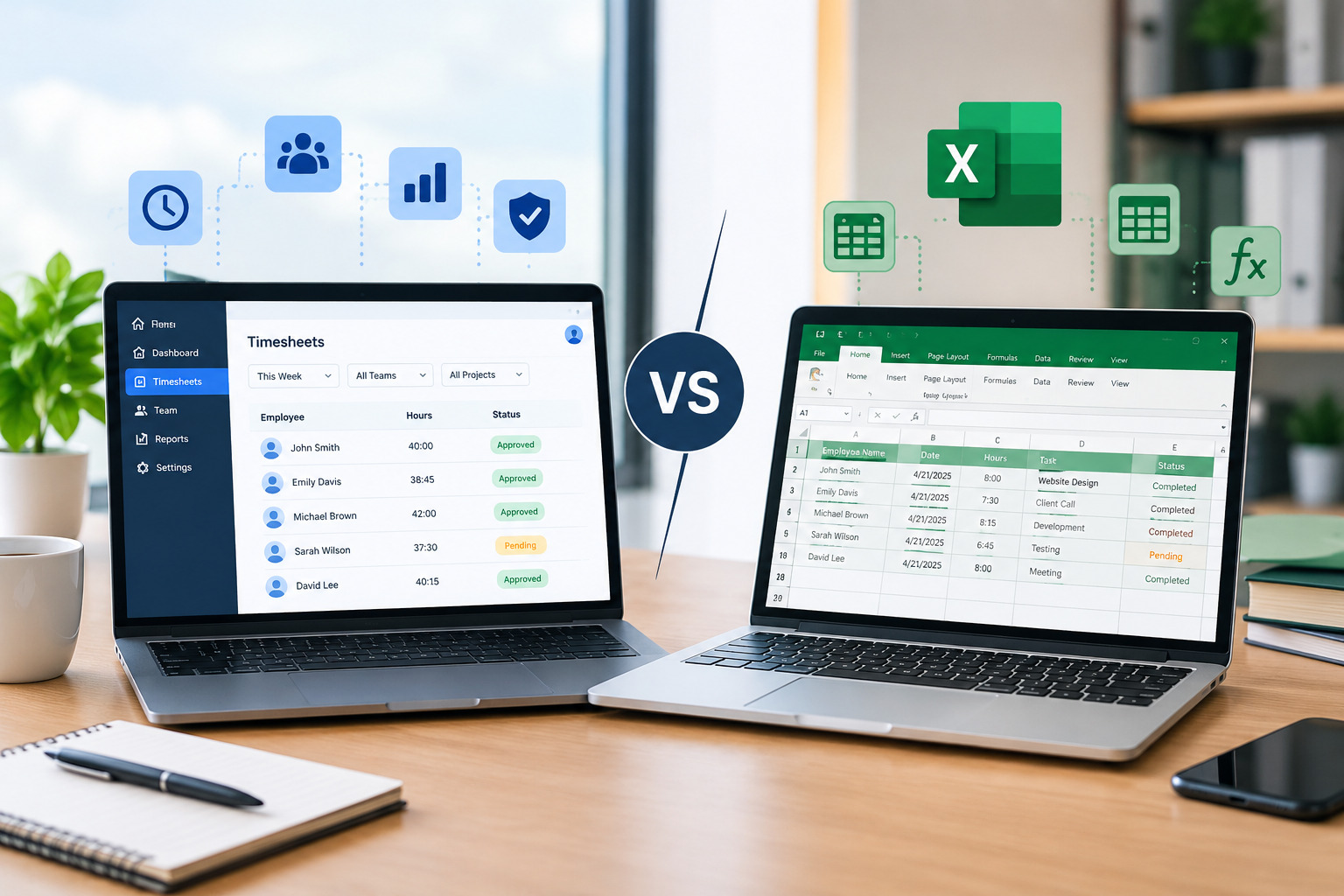
Instead of relying on spreadsheets and manual calculations, businesses gain real-time visibility into employee work hours and payroll data.
Office1Solution helps organizations simplify workforce operations through employee scheduling, attendance tracking, timesheet management, workforce reporting, and payroll-ready workforce visibility tools.
By centralizing workforce data, businesses can reduce payroll errors, improve compliance, and support more efficient payroll processing.
Factors Employers Should Consider
Before selecting a payroll schedule, employers should evaluate:
Workforce Type
Do employees work fixed schedules or variable shifts?
Overtime Requirements
How frequently does overtime occur?
Payroll Resources
Can the payroll team efficiently manage additional payroll runs?
Employee Preferences
Which pay schedule aligns best with workforce expectations?
Cash Flow Management
Can the organization comfortably manage payroll timing throughout the year?
The right answer often depends on business size, industry requirements, and workforce structure.
Frequently Asked Questions
What is the difference between bi-weekly and semi-monthly payroll?
Bi-weekly payroll pays employees every two weeks for a total of 26 pay periods annually, while semi-monthly payroll pays employees twice per month for a total of 24 pay periods annually.
Which payroll schedule is better?
Neither is universally better. Bi-weekly payroll often works best for hourly employees, while semi-monthly payroll is commonly preferred for salaried employees.
Why do employees like bi-weekly payroll?
Employees often appreciate receiving pay more frequently and benefiting from two additional paychecks each year.
Is semi-monthly payroll easier for accounting?
Yes. Semi-monthly payroll aligns closely with monthly financial reporting and benefit administration.
How does workforce management software help payroll?
Workforce management software improves payroll accuracy through attendance tracking, scheduling management, timesheet automation, and workforce reporting.
Final Thoughts
Choosing between bi-weekly and semi-monthly payroll is more than a payroll decision—it is a workforce management decision. The right payroll schedule can improve employee satisfaction, simplify payroll administration, reduce compliance risks, and support overall business efficiency.
Organizations should carefully evaluate their workforce structure, payroll requirements, and operational goals before making a decision.
As businesses continue adopting digital workforce solutions, integrating payroll with scheduling, attendance tracking, and timesheet management will become increasingly important for maintaining payroll accuracy and workforce visibility in the modern workplace.
Recent Posts
- Time and Attendance Software: Complete Guide for Employers

- Time and Attendance: What’s the Difference Between the Two?

- How to Reduce Timesheet Errors and Improve Payroll Accuracy

- Timesheet App for Employees: Features, Benefits & Best Practices

- Timesheet Software vs. Excel: Which Is Better for Businesses?
Stay Ahead. Simplify Workforce Management.
Empower your teams to work efficiently with a unified workforce platform built for clarity, control, and actionable insights across your organization.